A life shaped by stage lights and sacred images
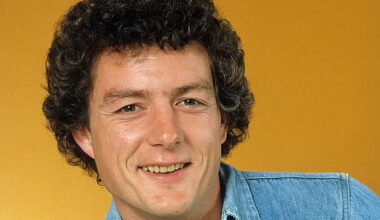
Frank C. Turner is a unique public figure who seems to have followed two brilliant pathways at once. One road crosses theater, film, and TV. The other goes through prayer, sacred art, and iconography. One significant career is rare. Turner built 2.
Francis Charles Turner, born June 2, 1951, in Wainwright, Alberta, Canada, was raised away from celebrity culture. His later life was already being laid. Alberta provided his childhood, family, and spiritual environment, which shaped his iconography. His story resembles a prairie road that unexpectedly leads to a church and a film.
His public identity is often summarized in a few quick labels: Canadian actor, iconographer, husband, father. But each of those words carries decades of work behind it. He did not appear suddenly. He built his life piece by piece, role by role, image by image.
Early life and education
His early development reveals how grounded his work is, which I find interesting. Turner earned a BFA in acting from the University of Alberta in 1975. His formal schooling gave him a disciplined start, but it did not launch his career. What happened next mattered too.
His theatre career spans western Canada and Ontario after graduation. Screen careers were not glamourous in the beginning. They were apprenticeship years. He gained timing, presence, voice, and stamina through live performing. His stable, long-lasting career reveals how theatre sharpens actors like whetstones do steel.
By 1983, Turner moved to Vancouver, a city that would become central to his professional life. That move proved decisive. Vancouver offered a larger base for film and television work, and it became the main stage for his screen career.
Building a career in film and television
Turner has been performing since 1975, and I like his versatility and longevity. He became a reliable performer fans recognize even if they don’t know his name. Family entertainment, drama, horror, fantasy, and television shows were among his roles.
He appeared in The Fly II, Stephen King’s It, Look Who’s Talking Now, Air Bud, Cats & Dogs, Snow Dogs, The Duke, Spooksville, The New Addams Family, and Sonic the Hedgehog. The list smoothly transitions from somber to humorous family stories, making it uncommon. One-lane actors exist. Turner obviously did not.
He also became familiar to television audiences through recurring and guest appearances in various productions. His career has the texture of a working actor’s life: persistent, adaptable, and quietly impressive. He was not just chasing fame. He was building a body of work.
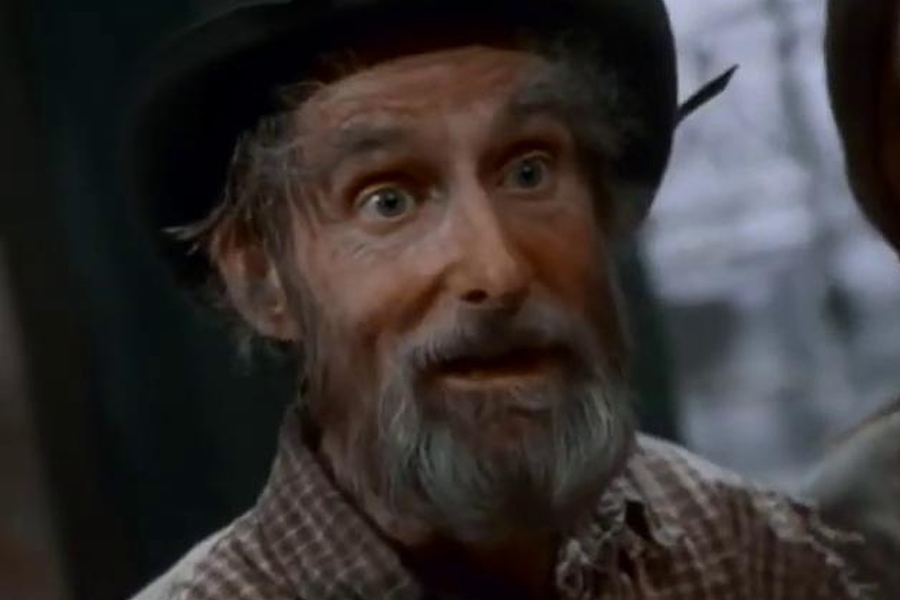
In 2020, he appeared in Sonic the Hedgehog as Crazy Carl, a role that introduced him to a newer generation of viewers. It is one of those career moments that highlights his staying power. Decades after beginning in theatre, he was still visible in mainstream film.
Awards and professional recognition
Recognition and longevity are important. Turner was nominated for a 1997 Gemini Award for Best Guest Actor in a Dramatic Series. He went beyond productive with that nomination. It proved his craft was highly regarded.
A Leo Award for Best Performance in a Youth or Children’s Program or Series followed in 2015. I think this shows his versatility. Acting in adult drama is different. Success in children’s programming requires balancing clarity, intensity, and emotional truth.
These milestones do not define his entire career, but they illuminate it. They are like lanterns placed along a long road, showing the shape of the journey.
The quieter vocation of iconography
What makes Frank C Turner especially fascinating to me is that acting is only half the portrait. He is also an iconographer, and not in a casual or decorative sense. He trained seriously, worked extensively, taught others, and became deeply involved in sacred arts.
His early religious experiences in Alberta, particularly liturgical practice, may have influenced his fascination in holy iconography. That seed developed into focused study. He studied iconography under Vladislav Andreyev in 1991. Further studies, especially at Mount Angel Iconography Institute, shaped him.
Work and education in Italy, notably Bologna, strengthened that route between 2006 and 2008. He created about 60 Byzantine egg tempera icons for churches and individuals. That amount alone shows dedication. Iconography is laborious. It requires patience, prayer, technique, and spirituality.
He also taught workshops and offered private instruction, passing his knowledge on to others. In this part of his life, Turner seems less like a performer seeking applause and more like a craftsman tending a flame. The work is slower, quieter, and devotional.
Leadership in sacred arts
Turner’s role in sacred art was not limited to making icons. He also served as a founding member and long-time president of the Epiphany Sacred Arts Guild. That leadership suggests he was helping build not just artworks, but community.
I think this matters since it shows his life pattern. Again and again, his work transcends self-expression. He appears to have worked with communities of practice in theatre, television, and sacred arts. This makes his career feel like a series of shared stages rather than a spotlight.
His iconography has continued to receive attention in recent years, including references to works such as The Three Epiphanies. Even when the entertainment world is noisy and fast, his sacred art stands apart like stained glass in winter light.
Frank C Turner’s family life
Frank C. Turner’s family history is scarce, although a few key elements are known. Marriage to Jan Turner has been part of his life for decades. Their marriage dates back to 1976, thus it has lasted almost his whole career.
That span feels significant. Creative careers involve uncertainty, travel, role changes, and irregular rhythms. Staying married for decades shows stability underlying the public work. His public biography makes Jan Turner the most prominent family member and the family narrative’s major figure.
The couple also has four children. Public biographies confirm that number, though they do not reliably identify all of them by name. For that reason, it is more responsible to focus on what is known rather than fill the space with speculation.
Still, even the limited public facts give a meaningful picture. Turner is not only a career actor and artist. He is also a husband and father of a family of six. That family framework likely formed the hidden architecture behind many visible achievements.
A quick family snapshot
| Family Member | Relationship | Publicly Known Details |
|---|---|---|
| Jan Turner | Spouse | Long-term wife, publicly associated with marriage since 1976 |
| Four children | Children | Public biographies confirm he has four children |
| Parents | Not publicly confirmed | No reliable public details widely documented |
| Siblings | Not publicly confirmed | No reliable public details widely documented |
Personal character beyond the credits
His life’s coherence impresses me. An actor and an iconographer may appear unrelated. Image, presence, and interpretation are involved in both. To show the truth, actors act. A sacred picture is painted by an iconographer for people to examine. One works moving, the other motionless. Both need focus, concentration, and humility before the form.
That duality gives Turner’s life unusual depth. He is not merely a performer with a side interest. He is someone who appears to have moved seriously between public art and sacred art for decades.
His life shows endurance. Born in 1951, trained in the 1970s, moved in 1983, studied iconography in 1991, reached fame in 1997 and 2015, and continued to work openly into the 2020s. That timeline isn’t fast. Long-burning candle.
Key dates in Frank C Turner’s life
| Year | Event |
|---|---|
| 1951 | Born in Wainwright, Alberta on June 2 |
| 1975 | Graduates from the University of Alberta with a BFA in acting |
| 1975 | Begins professional acting career |
| 1976 | Publicly associated with marriage to Jan Turner |
| 1983 | Moves to Vancouver |
| 1991 | Begins formal study of iconography |
| 1997 | Receives Gemini Award nomination |
| 2003 | Performs as George Bernard Shaw in a notable debate production |
| 2006 | Continues iconography study and work in Italy |
| 2008 | Extends sacred art training and production |
| 2015 | Wins a Leo Award |
| 2020 | Appears in Sonic the Hedgehog as Crazy Carl |
FAQ
Who is Frank C Turner?
Frank C Turner, born Francis Charles Turner, is a Canadian actor and iconographer born on June 2, 1951, in Wainwright, Alberta. He is known for a long screen career in film and television and for producing Byzantine-style religious icons.
What is Frank C Turner best known for?
He is known for a wide range of acting roles in productions such as Stephen King’s It, Air Bud, Cats & Dogs, The New Addams Family, and Sonic the Hedgehog. He is also recognized in sacred arts circles for his work as an iconographer.
Who is Frank C Turner’s wife?
His wife is Jan Turner. Public biographical details consistently identify her as his long-term spouse, with the marriage commonly linked to 1976.
How many children does Frank C Turner have?
Frank C Turner has four children. Publicly available biographies confirm the number, though they do not reliably provide detailed information about each child.
Where was Frank C Turner born?
He was born in Wainwright, Alberta, Canada, on June 2, 1951.
Where did Frank C Turner study acting?
He studied at the University of Alberta and graduated in 1975 with a Bachelor of Fine Arts in acting.
When did Frank C Turner move to Vancouver?
He moved to Vancouver in 1983, and that city became the center of most of his screen career.
What awards has Frank C Turner received?
He received a Gemini Award nomination in 1997 for guest acting in a dramatic series and won a Leo Award in 2015 for performance in youth or children’s programming.
What is Frank C Turner’s work as an iconographer?
He is a trained iconographer who began formal study in 1991. Over time, he completed more than 60 Byzantine egg tempera icons, taught workshops, and contributed to sacred arts leadership and education.
Are Frank C Turner’s parents or siblings publicly known?
There is no widely reliable public information naming his parents or siblings. The most clearly documented family details focus on his wife, Jan Turner, and their four children.