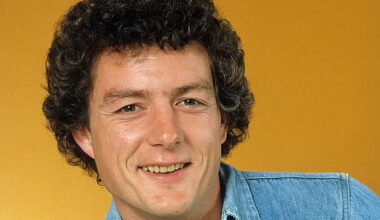
Henrietta Sophia March Phillipps lived in the long shadow of a short and extraordinary life. Born in Westminster, London, on 15 June 1943, she was the posthumous daughter of Major Gustavus Henry March Phillipps and Marjorie Frances Esclairmonde Stewart. Her father had been killed in action nine months earlier, before he could see his child. Her mother was an actress and wartime staff member of the Special Operations Executive.
Henrietta lived a gentler life than her parents’ legend. She attended Oxford University, wrote plays, married Gianfranco Gregoris in 1978, and appeared on BBC radio about her father in 1971. She died at 47 in Chelsea, London, on 24 May 1991.
Public records exclude many details. Absence is part of the story. In the military, society, or writing, Henrietta was not famous. Instead, she is a private woman whose family history includes commando raids, wartime intelligence, theatre, colonial administration, aristocratic ties, and grief.
A daughter born into wartime history
Henrietta’s father, Gustavus Henry “Gus” March Phillipps, was born in 1908. After joining the British Army, he led No 62 Commando, the Small Scale Raiding Force. The force conducted reconnaissance, prisoner snatching, sabotage, and attacks along occupied Europe’s coast and beyond.
March Phillipps was associated with daring operations, including Operation Postmaster in January 1942. During that raid, British and allied personnel seized enemy and Axis shipping from the harbour of Santa Isabel on the Spanish island of Fernando Po, now Bioko. The mission had the feel of a thriller, but its success rested on careful planning, deception, seamanship, and nerve.
He married Marjorie Stewart in April 1942. The precise date is given differently in surviving accounts, with 18 April and 1 April both appearing. Their marriage was brief. On 12 September 1942, March Phillipps led Operation Aquatint on the Normandy coast and was killed during the failed raid.
Henrietta was born several months later. Her father therefore became, in her life, both a family absence and a public legend. She inherited the name of a man remembered for courage, but she did not inherit personal memories of him.
Operation Aquatint and the death of her father
Operation Aquatint took place during the night of 12 to 13 September 1942. The target was the Normandy coast near Sainte Honorine des Pertes and Port en Bessin, an area later associated with the Omaha Beach sector of the D Day landings.
The raiding party travelled from Britain aboard MTB 344, a small motor torpedo boat known by the vivid nickname “The Little Pisser.” The plan was to land in a collapsible Goatley boat, climb the cliffs, overpower a German position, capture a prisoner, gather intelligence, and withdraw before dawn.
Force comprised of 11 men. Captains Graham Hayes, John Burton, and Lord Francis Howard, Lieutenant Anthony Hall, Company Sergeant Major Thomas Winter, Sergeant Allen Michael Williams, Privates Jan Hollings and Adam Orr, Private Richard Leonard, and Free French officer Maître André Desgranges accompanied March Phillipps
The operation was compromised by poor visibility and navigational difficulties. The commandos landed roughly a mile from the intended point, on a stretch of coast more heavily patrolled than expected. A German patrol, assisted by a dog, discovered them soon after they came ashore.
Gunfire erupted in the darkness. The raiding party tried to move back toward the sea, but their small boat was damaged and began to sink. German machine guns and coastal defences made recovery impossible. The MTB itself came under fire and withdrew after its engine was damaged.
Sergeant Williams, Private Leonard, and March Phillipps died on the shore. Their remains were buried at Saint Laurent sur Mer’s graveyard. The raid scattered survivors along France’s coast. Some were caught, while others fled across occupied France and Spain.
Captain Graham Hayes survived the conflict but was betrayed and taken by the Germans. He was shot by firing squad at Fresnes Prison on July 13, 1943, per Hitler’s Commando Order. Others faced jail, escape attempts, or years of uncertainty. One of the darkest periods in early British special forces history was Operation Aquatint.
For Henrietta, this was the event that defined her father’s public memory. For Marjorie, it was the personal disaster of becoming a widow while pregnant.
Marjorie Stewart, actress and wartime worker
Henrietta’s mother, Marjorie Frances Esclairmonde Stewart, was born in London on 18 May 1912. She began performing in West End plays as a young woman. Her stage career brought her into the glittering world of performance, but the Second World War took her elsewhere.
The Special Operations Executive employed Marjorie. After working as a lift operator, she became an operational planning administrative and secretarial assistant. Despite not being a field spy, she worked near British wartime resistance’s secret apparatus.
In the late 1940s, 1950s, and early 1960s, she returned to performing in films and TV. Her life blended stage glamour with wartime discipline. She married fourth baronet Major Sir John Stanley Vincent Marling in 1957.
Marjorie’s later marriage gave Henrietta a stepfather and a second household. The family was associated with Woodcray Manor Farm near Wokingham in Berkshire. Family photographs from later decades suggest a comfortable setting, but Henrietta herself remained outside the world of celebrity.
Marjorie died in Kensington on 9 November 1988, three years before her daughter. In the 2024 film The Ministry of Ungentlemanly Warfare, Marjorie was portrayed by Eiza González, although the film presents a heavily fictionalised version of the wartime story.
The March Phillipps family
The March Phillipps and March Phillipps de Lisle family was Henrietta’s long and intricate paternal line. The family had Catholic and aristocratic ties to Leicestershire estates Garendon Park and Grace Dieu Manor.
Her paternal grandfather was Lisle March Phillipps, who lived at Satwell Old Farm near Henley on Thames. He served with Rimington’s Guides during the Second Boer War and later wrote about his experiences. He married Isabel Forbes Coulson in 1902.
Isabel came from the Coulson family of Northumberland and Devon. Her father was Henry John Wastell Coulson, a barrister associated with Newbrough Hall and Tiverton. Her brother, Gustavus Hamilton Blenkinsopp Coulson, was a soldier who received the Victoria Cross.
Henrietta’s paternal aunts included Helen March Phillipps, who married Frank Anthony Horne in 1926, and Diana March Phillipps, who married Henry Wright in 1939. Diana later lived in Pembrokeshire.
Spencer March Phillipps and Georgina Theophilia Dashwood, of the older March Phillipps ancestry, were also in the family tree. Another notable relative was Ambrose Lisle March Phillipps de Lisle, a Grace Dieu member and Catholic revivalist.
The Stewart family background
Henrietta’s maternal family had a different character. Her grandfather, Sir Francis Hugh Stewart, was a colonial merchant associated with Calcutta. He held the distinction of Companion of the Order of the Indian Empire and later lived at Little Hallands in Bishopstone, Sussex.
Her grandmother, Lady Frances Stewart, was involved in Indian political and social questions. She supported Indian independence, served as honorary secretary of the National Indian Association, and later stood for Parliament after returning to Britain.
Marjorie was one of seven children. Among Henrietta’s maternal relatives was Lieutenant Colonel Francis Robert Cameron Stewart, who died in 1996. The Stewart family therefore brought together imperial commerce, political activism, military service, and the cultural world of the theatre.
Oxford, playwriting, and a private adulthood
Henrietta attended Oxford University and graduated during the 1960s. Later descriptions identify her as a playwright, although no substantial catalogue of produced plays or published scripts is widely associated with her name.
I find this quiet professional record revealing. Henrietta may have written seriously without seeking a public literary career, or her work may simply have remained outside the major theatrical record. Either way, the surviving picture is not one of failure but of privacy.
Her best-known public appearance was on the BBC radio show “Looking for Gus” in 1971, where she discussed her father and the gap between family memory and military mythology. She was more than a deceased commando officer’s daughter. She could talk about him herself.
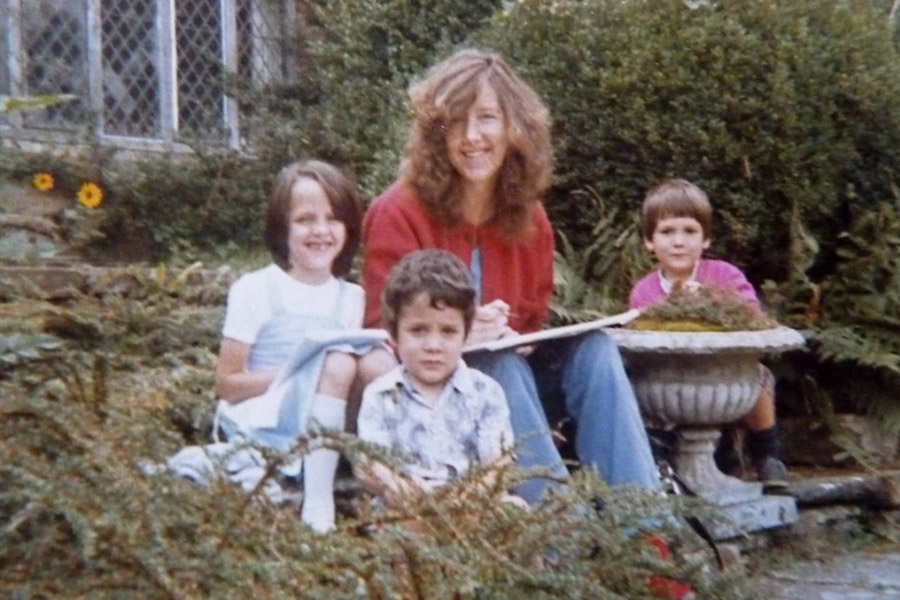
She married Gianfranco Gregoris in Reading, Berkshire, in April 1978. No generally available story details his background. None of their children were recorded. At least one Woodcray family portrait shows Henrietta as Alasdair’s godmother.
Henrietta’s place in the family story
Several history intersect at Henrietta March Phillipps. She was linked to Britain’s early special forces and the risky experiments that moulded commando and SAS methods by her father. Her mother gave her theatre and secret wartime administrative connections. Her grandparents brought Catholic heritage, colonial commerce, political involvement, military distinction, and old estates.
Yet her own life resisted the drama of those connections. She did not become a public historian of her father, publish a celebrated memoir, or turn the family story into a career. Her role was more subtle. By appearing in “Looking for Gus,” she helped preserve a human connection to a man otherwise remembered through operation reports, memorials, and military biographies.
Frequently asked questions
Who was Henrietta March Phillipps?
Henrietta Sophia March Phillipps was the posthumous daughter of Major Gustavus Henry March Phillipps and actress Marjorie Stewart. She studied at Oxford, worked as a playwright, married Gianfranco Gregoris, and lived mostly away from public attention.
When was Henrietta March Phillipps born?
She was born on 15 June 1943 in the City of Westminster, London, about nine months after her father was killed in action.
Who was her father?
Her father was Major Gustavus Henry “Gus” March Phillipps, commander of No 62 Commando, also known as the Small Scale Raiding Force. He was killed during Operation Aquatint on 12 September 1942.
What happened during Operation Aquatint?
A British raiding group landed on Normandy’s shore on September 12-13, 1942. Due to poor visibility, they landed near where German soldiers found them. March Phillipps and two others died, others were taken, and others fled through occupied Europe.
Who was Henrietta’s mother?
Her mother was Marjorie Frances Esclairmonde Stewart, an actress who also worked in administrative and secretarial roles for the Special Operations Executive during the Second World War. She later married Sir John Stanley Vincent Marling.
Did Henrietta have children?
No children are recorded from her marriage to Gianfranco Gregoris.
When did Henrietta die?
She died in Chelsea, London, on 24 May 1991, aged 47. Public accounts do not provide a detailed cause of death.
What is Henrietta best known for publicly?
She is best known for appearing in the 1971 BBC radio programme “Looking for Gus,” where she discussed her father’s wartime service and legacy.