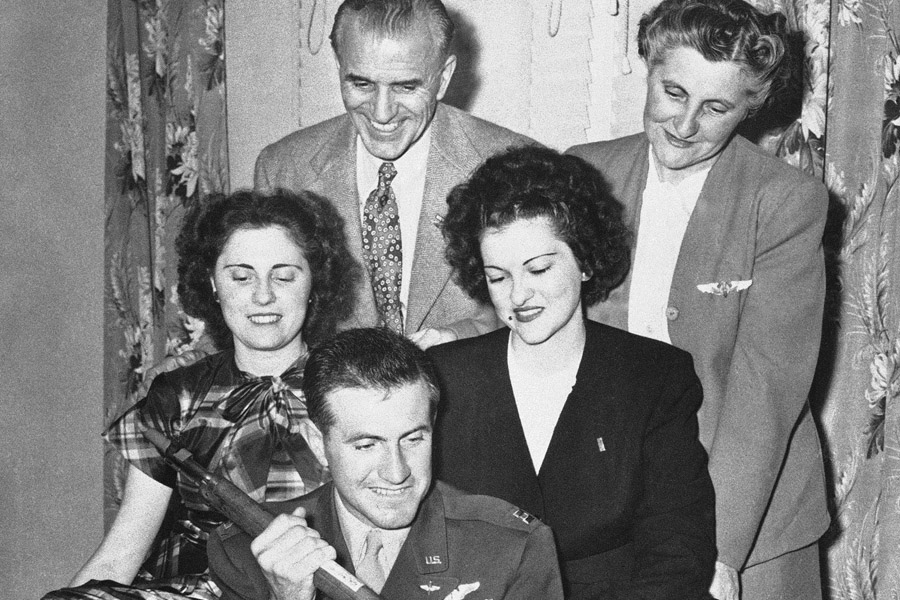
Virginia Mae Zamperini, as Virginia Mae Flye, was connected to one of the most outstanding American family stories. She was the youngest sister of Louis Zamperini, the Olympic runner, World War II airman, prisoner of war survivor, and inspiring speaker whose life was immortalised in Unbroken.
Virginia kept her personal life private. She did not publish a memoir or capitalise on her renowned sibling. Her tale is quieter, influenced by family loyalty, marriage, faith, and regular obligations that surround great individuals. Virginia’s life fits into an Italian American family’s discipline, fortitude, and love when evaluated alongside her parents and siblings.
Virginia Zamperini’s Early Years in California
Virginia was born on September 19, 1923, in California, likely in or near Torrance. Her parents, Anthony Zamperini and Louise Dossi Zamperini, had built a home for their children after moving west from New York during the early 1920s.
The Zamperinis lived like many immigrant families. Antonio, Anthony, was born in Verona in 1889. His railway electrician and air brake mechanic jobs demanded precision and practicality. Louise, born in Pennsylvania in 1898 to Italian parents, was the family’s emotional center.
Virginia had older siblings Pete, Sylvia, and Louis. Due to age differences, Louis was a mature young man when Virginia was born. Pete was born 1915, Sylvia 1918, and Louis 1917. Virginia joined a family with high aspirations, athleticism, and hard work.
Torrance was significant to the family. Virginia’s childhood was difficult, but Southern California gave possibilities. During the Great Depression, immigrant households relied on family collaboration. Support was not often expressed through extensive chats in such homes. It showed up in shared meals, practical help, discipline, and perseverance.
The Zamperini Family Members
Virginia’s family included several people who played important roles in the Zamperini story.
| Family member | Relationship to Virginia | Known for |
|---|---|---|
| Anthony Zamperini | Father | Work as an electrician and railway air brake mechanic |
| Louise Dossi Zamperini | Mother | Family care, Catholic faith, and strong household support |
| Pete S. Zamperini | Older brother | Athlete, coach, USC graduate, and Navy veteran |
| Sylvia Theresa Zamperini Flammer | Older sister | Family life and marriage to Harvey Bristow Flammer |
| Louis Silvie Zamperini | Older brother | Olympic running, military service, survival, and motivational work |
| Howard Gordon Flye | Husband | Virginia’s longtime spouse |
| Cissy Zamperini Garris | Niece | Daughter of Louis and contributor to the family legacy |
| Luke Zamperini | Nephew | Son of Louis and leader connected to the Louis Zamperini Foundation |
Pete Zamperini was an important influence on Louis’s athletic development. He was a talented athlete himself and later became a coach. His example and encouragement helped Louis pursue competitive running during a period when the younger brother was still developing confidence and discipline.
Sylvia, Virginia’s older sister, remained part of the close family circle. She married Harvey Bristow Flammer. Like Virginia, Sylvia lived outside the public attention that followed Louis.
Louis’s story was the family’s most famous. After competing in the 1936 Berlin Olympics, he joined the US Army Air Forces. After his plane crashed over the Pacific, Louis survived a long sea voyage and Japanese prisoner of war camps. Returning home offered relief but also psychological and spiritual problems that defined his life.
For Virginia, Louis was not only a decorated survivor. He was also her brother, someone whose absence would have been felt at the family table and whose return would have carried deep personal meaning.
Virginia’s Marriage to Howard Gordon Flye
Virginia married Howard Gordon Flye on September 19, 1948, in Los Angeles. The date was also Virginia’s twenty fifth birthday, making the occasion especially memorable.
Howard and Virginia were together for decades after his 1919 birth. Virginia married into a new family while remaining close to the Zamperini family. We know little about their private life or children from public records. Virginia seems to enjoy privacy.
The US changed greatly after WWII. Families migrated, careers developed, and veterans rebuilt. Louis’s new public status also affected the Zamperini family. He wrote, spoke, and promoted forgiveness and self-improvement. That world was mostly family for Virginia. She was among the relatives who shared memories, welcomed Louis home, and maintained family relationships.
A Sister Behind the Famous Story
Famous lives are often supported by people whose names appear only occasionally in photographs or family accounts. Virginia seems to have been one of those people.
Postwar family gatherings, including Louis’s return and public work, included her. Awards and headlines didn’t quantify her work. That was shown by continuity. As Louis’s story became national, she stayed with the family.
That kind of role can be compared to the foundation beneath a house. It is rarely visible, but the structure depends on it. Virginia’s life represented the private side of the Zamperini legacy, the side formed through marriage, family gatherings, remembrance, and steady support.
She also belonged to a family known for longevity. Her parents lived into their later years, and several siblings reached their eighties or nineties. Virginia’s long life reflected the resilience that became one of the family’s defining themes.
The Later Years in Colorado
Virginia and Howard eventually became connected with Colorado. Howard died in 2005. Virginia died on July 29, 2008, in Littleton, Colorado, at the age of 84.
The year 2008 brought several losses to the family. Virginia’s brother Pete also died that year, as did her sister Sylvia. Their passing marked the closing of an important generation of the Zamperini family.
Virginia and Howard were buried at Fort Logan National Cemetery in the Denver area. The cemetery is the final resting place of many veterans and military families, making it a fitting setting for someone whose life was closely connected to the wartime experience of her brother.
The Louis Zamperini Foundation
Although Virginia was not a prominent leader of the Louis Zamperini Foundation, its beliefs reflected her family story with Louis. The group continues Louis’s character education, resilience training, forgiveness, faith, and service with youth.
Louis founded the nonprofit after working with at-risk adolescents at Victory Boys Camp. Modern programs exploit his life to assist students overcome difficulties. The message goes beyond overcoming suffering. Hardship can inspire responsibility, empathy, and purpose.
Unbroken Curriculum is a huge project. This resource supports social and emotional learning in schools and youth programs using Louis’s tale. Students explore bullying, isolation, forgiveness, respectful communication, and personal choices. The curriculum has been used in public and private schools, residential programs, youth prisons, and more.
Foundation President and CEO Luke Zamperini is Louis’s son and Virginia’s nephew. Luke’s wife Lisa Zamperini has also led. Other family and professional advisers have education, finance, legal, fundraising, counselling, and nonprofit management experience.
The charity works with US schools, including programs for disadvantaged pupils. Louis’s personal history connects the past and present. In classrooms and youth programs, a Southern California immigrant family’s narrative reaches young people seeking direction.
Virginia Zamperini’s Place in Family History
Virginia’s significance lies in her role in a family that withstood war, tragedy, success, and transition. She was the youngest daughter of Anthony and Louise, sister of Pete, Sylvia, and Louis, wife of Howard Flye, and aunt to family members who preserve and share the tradition.
Her life reminds me that history is not made only by the people whose names appear in books. It is also carried by sisters, spouses, parents, and relatives who preserve connection when public attention moves elsewhere. Virginia’s story is a small but important room in the larger Zamperini house.
FAQ
Who was Virginia Zamperini?
Virginia Mae Zamperini, later Virginia Mae Flye, was the youngest sister of Louis Zamperini. She was born on September 19, 1923, in California and lived much of her early life in the Torrance area.
Who were Virginia Zamperini’s parents?
Her parents were Anthony Zamperini and Louise Dossi Zamperini. Anthony was an Italian immigrant from Verona who worked as an electrician and railway air brake mechanic. Louise was born in Pennsylvania to an Italian family.
Who were Virginia Zamperini’s siblings?
Virginia’s siblings were Pete S. Zamperini, Sylvia Theresa Zamperini Flammer, and Louis Silvie Zamperini. Louis became famous as an Olympic runner, World War II survivor, and motivational speaker.
When did Virginia Zamperini marry Howard Flye?
Virginia married Howard Gordon Flye on September 19, 1948, in Los Angeles. The wedding took place on her twenty fifth birthday.
Did Virginia Zamperini have children?
Publicly available family information does not provide a clear, detailed record of children for Virginia and Howard Flye. She lived a private life compared with her brother Louis.
When and where did Virginia Zamperini die?
Virginia died on July 29, 2008, in Littleton, Colorado. She was 84 years old.
Where was Virginia Zamperini buried?
Virginia and her husband, Howard, were buried at Fort Logan National Cemetery near Denver, Colorado.
How was Virginia connected to the Louis Zamperini Foundation?
Virginia was part of the family whose history and values helped shape Louis Zamperini’s legacy. The foundation is led in part by her nephew Luke Zamperini and continues Louis’s work with youth through education, resilience training, forgiveness, and character development.